




Moving Furniture Interstate – A Comprehensive Guide


Author | Steve Blackwell
 relocationswa.com/about/steve-blackwell
 linkedin.com/in/steve-blackwell
When moving interstate in Australia, among your foremost concerns would probably be figuring out the best way to move from one state to another – safe pet transport, interstate vehicle transport and all. You’ll also be mulling over moving furniture interstate safely during your long-distance relocation.
How to move interstate without a hitch? While there are dedicated pet and car relocation services you could use, you still might want to know the best way to move cross country with all your furniture. After all, you wouldn’t want your custom furniture to get damaged along the way. There are also pieces you value greatly, not because they’re expensive but because they’re considered family heirlooms.
So, if you need help moving furniture interstate, this comprehensive guide should provide you with enough ideas to ensure a smooth process of moving from Perth to Sydney, relocating to South Australia, or elsewhere in the country.
How to Move Furniture to Another State
Knowing how to move furniture to another state safely and efficiently beforehand is crucial, as it can get expensive or become a hassle when you’re pressed for time. Therefore, plan for it accordingly and make sure you include it on your moving checklist.
Try to cover all the bases and be as detailed as possible – just like on your change of address checklist.
If selling some or all your furniture is out of the question, then consider the following steps to prepare your furniture for an interstate move:
1. Take an inventory of your furniture.
Make a list of all the items you have to prepare. By getting these details together, you’ll be able to calculate how much time you need to disassemble furniture and which ones you can prepare ahead of your move. For example, you can take apart most of your home office furniture before your moving date, but you’ll probably need to leave the beds for later.
2. Get your packing supplies together.
Aside from cartons or cardboard boxes, packing tape and bubble wrap, make sure you have other furniture moving supplies with you, including moving blankets, plastic stretch wrap, furniture pads, sofa and mattress covers, and corrugated cardboard sheets. You can purchase these online or at a local hardware store, or you could also check with your removalists.
3. Take measurements of passageways.
Before you begin dismantling furniture, you need to find out first which items can be moved intact through doorways, hallways, lifts or down the stairwells. If there are furniture pieces you can move without the need for disassembly, then you can save yourself some valuable time.
However, there might also be large pieces like couches or sofas that are too bulky and cannot be dismantled, so you may need to remove doors before being able to transport them. In the meantime, you might also want to remove the table legs of your dining table to minimise the risk of them getting broken during your move.
4. Have the required tools and equipment on hand.
After taking stock of the items that have to be dismantled before your move, you should look into getting the tools and equipment you need to facilitate disassembly.
You’ll need tools to remove legs, doors, frames and tabletops. Also, keep several large resealable bags and a permanent marker on hand. You’ll need these to put any small parts like handles and screws safely together and to have them properly labelled. You can use furniture blankets to protect fragile, breakable or valuable items. Just wrap them carefully and seal with a few rounds of packing tape, and then label accordingly.
During your move, you can rent a dolly with straps for moving heavier pieces. Of course, if you’re working with trusted interstate removalists in Perth, they’ll have the right equipment to move your furniture safely and easily.
5. Start disassembling your furniture.
Now, it’s time to prepare the furniture pieces you have to disassemble. Furniture dismantling can be time-consuming, so make sure you do it early in the day or while you’re feeling energetic.
Below is a list of furniture pieces that you should consider disassembling:
- Tops and legs of all tables
- Knobs, handles and other removable parts from drawers, desks and dressers
- Cushions and legs of couches and chairs
- Bedframes, including the footboard and headboard
- Large bookshelves
To prevent the loss of smaller pieces or parts, put these inside resealable bags and label accordingly. Then tape each bag to the underside of the furniture piece it belongs. Avoid using tape in sections or on wooden furniture that can get damaged when you remove the tape. Also, if assembly instructions or manuals are still intact, include these with the furniture.
Also, properly wrap each piece. Use bubble wrap to pack wall art for moving and protect delicate items, like glass tabletops, lamps and ceramics. Use plastic wrap to protect upholstered pieces, such as sofas and mattresses. For wooden furniture, place moving blankets or furniture pads before the plastic wrap layer so the latter doesn’t come into direct contact with the wood.
6. Clear passageways.
A few days prior to moving day, make sure all doorways and entryways are clear and free from all clutter. If an internal door needs to be detached for the move, it would be better to work on getting that out of the way the day before the move.
During moving day, prop the doors wide open and use a door stopper to keep them open. Doing so will make it easier to move your furniture and prevent it from hitting any items and getting damaged.
Removalists can also take care of this on moving day. They will also have the right equipment to move your furniture safely and properly.
5 Must-Move Furniture Items for Your New Home
Here are five must-move furniture items that should be at the top of your list and how to move these furniture interstate for a smooth transition and a cosy, well-designed home.
Sofas and Couches
When moving furniture interstate, your sofa and couches are one of the few that you have to tackle. To disassemble your sofa, follow these steps:
- Locate Assembly Instructions: Find the original assembly manual, if available.
- Remove Detachable Parts: Take off any removable cushions or legs.
- Secure Pull-Out Beds: If your sofa has a pull-out bed, make sure the mattress and mechanism are secured to prevent accidental unfolding.
- Prepare for Disassembly: Some sofas may require an Allen key to unscrew certain parts.
- Partial Disassembly: Disassemble the sofa so two people can easily lift each piece. Separating the lounge from the chaise might be sufficient for moving it through a doorway.
Stand Alone Closets
Interstate furniture moves often involve the daunting task of transporting closets. To move your wardrobe, follow these steps:
- Remove Interior Components: Take out any removable shelves and drawers and pack them separately. Remove shelf pegs and store them in a plastic bag.
- Disassemble Sliding Doors: Carefully remove sliding doors and wrap them in moving blankets.
- Prepare for Moving: Moving a wardrobe often requires two or three people, especially when going up or down. Use furniture straps to protect walls from scratches.
- Secure Hinged Doors: For hinged doors, either remove the hinges or secure the doors shut with fabric tape or rope.
- Secure Drawers: Remove drawers and transport them separately, or secure them in place with tape to prevent movement.
Mattress
One of the most challenging aspects of an interstate furniture move is transporting bulky furniture like mattresses and beds. Disassembling Your Bed:
- Find the Manual: If possible, locate the original assembly instructions.
- Start with the Mattress: Remove the mattress and box spring.
- Disassemble the Frame: Take apart the bed frame and headboard.
- Teamwork: It’s best to have two people when disassembling and moving a bed, especially in tight spaces.
Moving a Heavy Bed:
- Get Help: Heavy, hardwood bed frames require extra help for lifting and moving.
- Gas Lift Beds: Disassemble the gas cylinders connecting the bed frame to the slat frame before handling the rest of the frame.
- Adjustable Beds: Unplug the electronic adapter from the motor, labelling the connections for easy reassembly.
Disassembling Other Beds:
- Bunk Beds and Cots: While it may be challenging without a manual, a systematic approach and labelling parts can help. Keep track of loose screws for reassembly.
Dining Tables
Transporting large, heavy things such as dining tables is one of the most demanding parts of moving furniture interstate.
- Teamwork: Moving a dining table, especially a large one, usually requires at least three people.
- Material and Design: Hardwood tables, glass-topped tables, or unique statement pieces may require special disassembly and handling.
- Disassembly: If the table is too large to move whole, remove the legs and set them aside for wrapping.
- Lifting and Carrying: Depending on the size, two to four people may be required to safely lift and carry the tabletop.
Large Appliances
Although not traditional furniture, large appliances require similar careful handling and transportation techniques when moving furniture interstate.
Moving Large Appliances:
- Manufacturer’s Instructions: Consult the specific instructions for your fridge, freezer, TV, or washing machine.
- Secure Loose Parts: Use tape to secure doors and removable parts.
- Washing Machine and Dryer: Install transit bolts to hold the drum in place during transportation.
- Appliance Dolly: Use a dolly for safe transport.
- Teamwork: Moving large appliances often requires two or more people.
- Safe Handling: Tilt the appliance slightly backwards on the dolly to balance the weight and protect the floor.
Effective Loading Practices When Moving Furniture Interstate
To ensure a smooth and damage-free move, it’s important to load your furniture onto the moving vehicle efficiently. You can optimise space, prevent damage, and make unloading easier using the right techniques. Here are some tips for efficient loading you move furniture interstate:
Use Proper Lifting Techniques
To avoid injury, it’s crucial to lift furniture correctly. Bend your knees, keeping your back straight, and hold the item close to your body. Use your leg strength to lift and turn your entire body by pivoting your feet. If an item is too heavy, don’t hesitate to ask for assistance.
Use Moving Tools
Moving furniture interstate is a breeze with furniture sliders. They let you effortlessly slide furniture across the floor. A dolly can make the job much easier for extra-large or heavy pieces. Just remember to keep the weight balanced to prevent tipping.
Collaborative Advantage
A team effort is the best way to move furniture interstate. With one person leading, another supporting from behind, and others lifting, even the largest pieces can be moved easily. Clear communication is essential for a smooth and safe move, ensuring everyone knows their part.
Place Heavy Items Closest to the Cab
To maintain balance during transport, start by loading heavy items near the front of the truck, closest to the cab. Sofas and mattresses can be placed upright to save space, but ensure they’re well-protected. Appliances should be secured along the truck’s sides and prevented from shifting using straps or bungee cords.
Protect Your Items
To shield your belongings:
- Wrap them in furniture blankets.
- To protect delicate or fragile items from damage, place delicate or fragile items on top of heavier, sturdy boxes.
- For stability, distribute the weight evenly across the truck floor and avoid stacking items too high to prevent them from tipping over during the move.
Choosing Your Belongings for the Move
Before you move, consider what furniture you truly need. Some items might be easier to replace at your new location. Selling unnecessary furniture when moving interstate can help declutter and fund your move.
Preparing Furniture for the Move
To protect your furniture during the move:
- Use quality packing materials: To shield your items from damage, use strong packing materials like bubble wrap and moving pads.
- Properly pack fragile items: Use foam or bubble wrap to protect delicate items like glass and mirrors.
- Pack furniture in boxes: If boxing furniture, use plenty of padding to prevent movement and label the boxes clearly.
- Prepare drawers and wardrobes: Empty drawers and wardrobes to avoid damage caused by weight and movement during transportation.
Organising Your Move
Clear labelling is essential for a smooth move.
- Label each item: Include your name, address, contact information, and the mover’s details.
- Mark fragile items: Use “FRAGILE” stickers or similar markings.
- Indicate orientation: Use arrows to show how items should be positioned.
- Label room destination: Indicate the room where each box or item should go (e.g., “Kitchen,” “Bedroom”).
Reducing Moving Expenses
To minimise moving costs:
- Research movers: Compare quotes and services to find the best deal.
- Choose experienced movers: Opt for companies with a proven track record of interstate moves.
- Plan carefully: Pack efficiently and only buy necessary packing supplies.
- Declutter: Sell or donate unwanted furniture to reduce the moving load.
- Time for your move: Ensure your new home is ready to avoid storage fees.
Interstate Furniture Moving Options
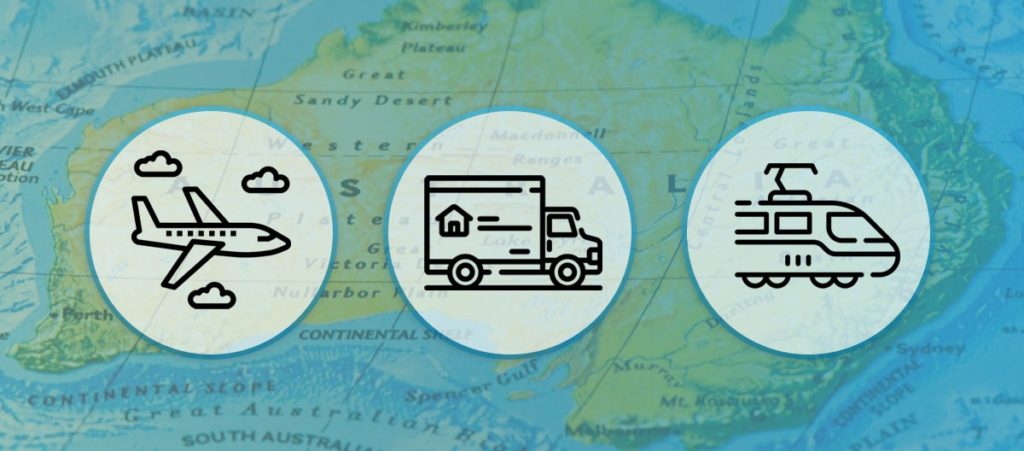
Determining the best way to ship belongings across the country depends on your budget and how much of your possessions you need to transport. There are different interstate moving options you can choose from:
- Moving interstate by air: Relocating by air is the fastest method of moving interstate – which is also why it’s the most expensive. If you need to move as soon as possible because of a job or offer, act quickly to get the best flight schedules and prices.
- Moving interstate by road: If you have the luxury of time and plan your move as early as possible, moving interstate by road could easily be the most affordable, simple and easy way of relocating elsewhere. If you have only a few possessions, you can use your own vehicles for your move. Of course, you can also hire the best cross state movers in Perth to help you relocate your belongings.
- Moving interstate by rail: A less popular though viable option is moving by rail. You can hire high-cube shipping containers to transport all your possessions – including your furniture. In fact, one container can easily accommodate the contents of a small house or two-bedroom apartment. Containers are transported via freight train and are supported by trucking services on both ends of the process. You can check our truck size guide to help you choose the best truck for your move.
Moving Heavy Furniture Interstate – What to Consider
If you have large, bulky or big-ticket pieces, transporting belongings interstate can become more challenging. However, there are specialist removalists of pianos, spas and other big items you can always talk to. You can also check with the removalist you are considering, as they might also have experience transporting belongings interstate that include big-ticket items.
With their professional input, it’ll be easier for you to weigh your options and see whether it would be a wiser move to sell those items and just buy new ones in your new place.
Other Optional Interstate Moving Services
Aside from interstate furniture removals, most removalists also offer other optional interstate moving services. These include:
- Storage: This provides you with a convenient long- and short-term storage to keep your belongings secure until you’re ready to get your things back.
- Learn about storage cost and prices in Australia
- Packing: Get the professional assistance you need in preparing and packing your things in time for your impending move.
- Car Transport: This facilitates the secure and organised transport of your car, motorbike, trailer, boat or any other vehicle to your destination.
- Pet Transport: Ensure the safety and comfort of your fur baby through a seamless pet transport facility.
- Transit Protection: Ensure your belongings get the cover they need with transit protection whether you’re moving by land, sea or air.
- Cleaning: Accomplish a very important condition on your bond clean checklist by hiring professional cleaning services delivered by your chosen removalist.
Costs for Moving Furniture Interstate

The costs of moving interstate vary greatly, as there are several factors you’ll have to consider in your calculations:
- What is the distance between the place of origin and your destination?
- The number of contents – are you moving possessions from a one, two or three-bedroom home?
- Will you be doing the packing yourself? Do you plan to DIY most moving tasks, or will you require additional services, such as car or pet transport?
- Are you planning to move by air, rail or road?
These are some of the most important considerations you need to make when budgeting for an interstate move. Depending on your situation and the services required, a good starting budget would be $3,500. Make sure you give yourself an allowance to accommodate unforeseen miscellaneous expenses. And don’t forget to include the travelling costs for yourself and your family.
➜ For accurate moving interstate costing, get a removal quote now.
Cheapest Way to Move Interstate
‘What’s the cheapest way to move interstate?’ you might ask.
Aside from hiring affordable long-distance movers, there are things you can do to save on your interstate move:
- Sell your old stuff and then buy replacement items at your destination. However, this may not be applicable to people who own cherished family heirlooms or valuable, one-of-a-kind items.
- Hire and drive a truck yourself. One downside of this arrangement is that you’ll have to take care of loading and unloading your possessions.
- Opt for backloading, where your things are loaded onto a truck that’s returning to a location that also happens to be your destination. This arrangement is perfect for smaller moves. You should also keep in mind that you could share the truck space with someone else, plus you need to be flexible and consider the schedule of the truck.
- Rent a trailer if your vehicle is equipped to pull one. However, prepare yourself for the long drive and fuel costs.
- Borrow a truck or trailer from a friend or relative to save on hire fees. But again, doing this comes with certain responsibilities. Make sure to return it with a full tank, and remember you owe a favour.
A word of caution – taking the DIY route can be a costly undertaking, as you may need to take a leave of absence from work. You also have to prepare for possible miscellaneous expenses, such as restaurant meals and hotel stays, as you’ll be travelling alone and will need to rest in between.
But when it comes to cheap movers who promise a lot of free services, it’s best to take such claims with a grain of salt, as they tend to overpromise and underdeliver.
The better alternative would be to entrust some or all of your moving needs to the professionals – interstate removalists who have an enviable track record of service.
➜ You might also like our in-depth guide on Cheapest Way to Move Interstate
Final Tips on Moving Interstate
So far, we’ve been able to share lots of tips on moving interstate, including preparing furniture for an impending move. Of course, we all know that planning is key in any house move, whether concerns local, interstate or international removals. And to minimise the stress of relocation, implement these additional tips:
- Check out your new home prior to relocating.
- Set up utilities when moving in your new place.
- Come up with a realistic moving budget.
- Declutter and give stuff away if you can.
- Conduct a background check on your prospective removalist.
- Create a packing checklist.
- Inform everyone of your change of address, including your bank, insurer, etc.
- Obtain a new driver’s licence in your new place.
You can also talk to our highly recommended interstate removal experts at Relocations WA to iron out the details of your interstate move. Get in touch today!
Moving house?
You might also like

Richest Suburbs in Perth: Where Interstate Movers Find Premium Living
We often speak with families, professionals, and downsizers who are moving to Perth because they want more than a new address. They want space, better lifestyle balance, beautiful beaches, access to the Swan…

Worst Suburbs in Melbourne: What You Should Know Before Relocating
Melbourne is one of Australia’s most popular relocation destinations, and it is easy to see why. It has strong job opportunities, great food, major universities, family-friendly pockets, and plenty of lifestyle variety. But…

Best Suburbs in Melbourne: Finding the Right Melbourne Suburb for You
Melbourne stands out as one of the world’s most livable cities thanks to its strong healthcare system, high-quality education, vibrant culture, reliable infrastructure, and overall stability. It currently ranks as the top city…




