





The Best Way to Pack Wall Art for Moving

Author | Steve Blackwell
 relocationswa.com/about/steve-blackwell
 linkedin.com/in/steve-blackwell
When you are moving, one of the things that you have to worry about is your wall art. You don’t want to damage those expensive masterpieces while they are being transported; you also want to make sure they are packed securely so they don’t get damaged in transit.
This blog post will discuss the best way to pack your wall art for moving. In addition, we will give you tips on protecting your precious items and ensuring they arrive at your new home in perfect condition!
Things You’ll Need for Packing Wall Art
Before you start packing your wall art, there are some things that you’ll need to make sure that everything is packed correctly. Here is a list of the supplies that you’ll need:

Cardboard box
A flat picture box protects your wall art from any bumps or falls during moving.
Bubble wrap
This will help to cushion the framed artwork and keep it safe in the moving box.
Packing tape
Tape is essential to seal up the boxes and keep everything secure.
Cardboard corners for painting protectors
This will help keep your artwork’s corners safe. You can also make DIY cardboard corners for picture frames and art to save money if you have time.
Markers or labels
You’ll want to label each box so that you know what is inside when disassembling furniture for moving.
Scissors
Scissors are versatile tools that offer both efficient cutting and precise measurement capabilities. With their sharp blades and elegant design, these handy gadgets can be used in various settings, from crafting projects to professional moving.
Steps for Best Way to Pack Wall Art for Moving
Once you have gathered all the supplies, it’s time to start packing your wall art. Here are some steps to follow:
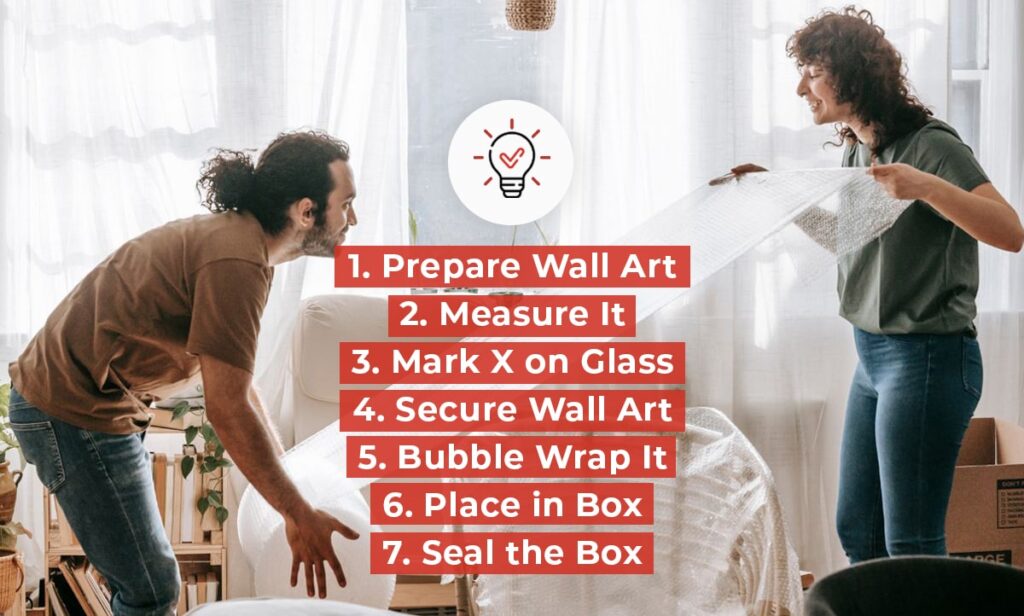
Step 1: Preparing the Wall Art for Packing
The first step in packing wall art is to clean the frames and glass. It will remove any dirt or dust that could cause scratches during transport. Or you can also opt for cleaning services too.
Next, remove any hanging hardware, such as nails or hooks, and secure it to the frame to prevent it from becoming lost or damaged.
Step 2: Measure the Art
Measuring your artwork is an essential step in the packing process. You’ll need to know the dimensions of your piece to determine what size of the box to use and how much bubble wrap you’ll need.
To measure your artwork, take a tape measure and find the piece’s width, height, and depth. Once you have these measurements, you can start planning for packing your artwork securely.
Step 3: Mark an X on the Glass
If your painting has a glass cover, place masking tape in an X shape to secure it. It will minimise movement if the glass shatters. Of course, you can skip this step when you pack paintings that don’t have a glass covering or are made of canvas.
Step 4: Secure the Art in Place
Once you’ve marked an X to the art, secure it with some strong tape. Ensure you use only a little tape, which could potentially damage the art.
Step 5: Wrap in Bubble Wrap
Lay the brown paper on a flat surface and overlap the ends to make a paper area twice the size of your frame. Then, place the glass-facing side of the frame against the paper.
Like a present, round the frame with the paper’s ends. Never use packing peanuts or newspaper to cover frames or pieces of art.
Newsprint can cause stains on the artwork, even though it is effective as cushioning. Make sure the bubbles are softening the outside of the package rather than pointing at the painting when you wrap.
Wrap the frame entirely in packing tape, longitudinally and width wise. By doing this, you can be sure the paper won’t move during the move.
After wrapping, tape the four corners of the frame with cardboard corner protectors to ensure there is no risk of dents or scratches.
Step 6: Place in Cardboard Box
Place your artwork in a box designed for moving, and use packing paper to fill any remaining space. Close the container tightly with packing tape and label it with the contents and “Fragile” on all four sides to ensure your artwork is handled carefully while transported.
Step 7: Seal the Box
Once your wall art is securely packed in the cardboard box and cushioned with extra material, seal it with packing tape. Ensure all seams are sealed properly to prevent any damage while in transit when moving furniture interstate.
Packing Tips
Here are some tips to keep in mind when packing your wall art for moving:
- Make sure the box is large enough to fit all your artwork.
- Buy customised cardboard corner protectors to provide extra protection for the corners when you pack a picture frame for moving.
- Wrap each piece separately and securely in bubble wrap.
- Use strong packing tape to seal the boxes.
- Label the boxes with “Fragile” and the contents.
- Put heavier items on the bottom of the box and lighter items on top.
If all of these sound like a hassle, Relocations WA offers packing and unpacking services.
How to Pack Paintings for Moving Using Bubble Wrap
This affordable material functions as an art protection shield. Bubble wrap is an economical alternative to more high-priced packing materials because of its self-evident application method. Use enough bubble wrap to completely encase your art before securing it with tape for safe movement.
The process of art collection protection during a move becomes effortless for novice art packers thanks to bubble wrap.
How to Pack Paintings for Moving with Moving Box
Selecting appropriate boxes serves as the starting point for a stress-free art move. The size and dimensions of your paintings should determine the box selection process because forcing small items into oversized boxes damages their protective integrity. You need to invest time into finding suitable boxes that precisely match each artwork piece.
Specialised artwork and mirror boxes work perfectly to protect smaller artworks. Sturdier wooden crates are the most reliable method for safeguarding large and valuable paintings.
Implementing the appropriate box as a protection method is essential, but you must also prioritise internal padding to achieve maximum safe transport.
How to Pack Paintings for Moving Using Shipping Tape
Shipping tape, often overlooked, is a vital tool for packing art. Its strength, durability, and clean sealing capabilities make it essential for securing artwork during a move.
Art packing relies heavily on shipping tape as this instrumental material goes unnoticed by many people. Artwork needs this material during transportation because its power, reliability, and neat sealing abilities serve as essential art protection systems.
The application of custom tape adds personalisation during moving operations, benefitting all types of clients while simultaneously serving as an effective branding tool.
Taping Tips for a Proper Packing of Artwork
The selection of appropriate tape is essential. Acrylic tape is suggested as an excellent protection method for valuable artwork. Polypropylene tape works well for sealing lighter items. You should protect your artwork by enclosing it in bubble wrap and applying shipping tape. The longevity of tape strips determines the effectiveness of their adhesive strength.
How to Pack Paintings for Moving Using Parchment Paper
Packing paintings for moving requires special care since fixing any scratches that develop becomes complicated. People experience distress when considering damage to valuable artworks because even precious paintings like Van Gogh would suffer amid relocation; thus, operators need additional precautions to protect their cargo.
Strategic wrapping with protective coverings becomes essential to stop surface marks and damage to the art. Dust, insect prevention, and surface protection start with parchment paper as an economical initial packing measure before bubble wrap or other materials.
Basic precautions for your precious artwork will confirm its safe arrival at your new location.
How to Pack Paintings for Moving Using Plastic Wrap
The process of packing your art for moving matches museum standards for protecting priceless artwork through plastic wrap application. The basic nature of this material functions as a barrier against contamination from dust, dirt, and paint surface damage.
The paint stays intact because plastic wrap manages moisture and stops paint surfaces from drying and turning into brittle material. You can feel assured when securing your artwork with plastic wrap because this material acts as a water-resistant barrier that protects against accidental spills and rain. Plastic wrap is an excellent storage solution for managing valuable pieces because it gives them additional defence during extended periods.
You can improve the appearance of your canvas by professionally wrapping it with plastic to achieve a look equivalent to gallery artwork.
Safely Loading Your Artwork for Transport
Proper packing of artwork represents only the beginning of effective art transportation safety. The first thing you must remember is that the distribution of pressure will be maximised, and harm can be minimised by placing frame boxes upright during transportation through moving trucks.
Fragile packages should be protected by being enclosed with weighty, stable items. Using tape is essential to make sure artwork remains inside its packing container. It is essential to keep artwork boxes from stacking and avoid placing weight on them.
For irreplaceable pieces, consider transporting them yourself for greater control and reduced risk. Professional art handlers or speciality movers are the best choices for large collections or highly valuable art. Their expertise ensures meticulous handling and transport.
To minimise risks, you should personally carry valuable artwork since it gives you full control over the movement process. When moving extensive art collections with significant valuable pieces, professional movers with specialty moving experience should be chosen. The specialists provide both precise handling methods and secure transportation procedures.
Art Packaging Tips For A Best Way to Pack Wall Art for Moving
Frames with large dimensions need their boxes to avoid frame damage. Use clean, thin gloves made from either cotton latex or nitrile when you need to manage unframed art and stop oil stains from your fingers.
Artist’s tape provides the best option for framed artwork because it allows easier removal than regular masking tape. Picture frame safety benefits greatly from the expense of purchasing cardboard corner protectors.
Avoid Packing Multiple Artworks in One Box
The desire to group artwork into fewer boxes should always be resisted. Packing multiple pieces together for transit creates destructive friction, which produces scratches and tears and damages cracks, specifically during bumpy road travel.
A separate packaging structure for each artwork item helps you easily find and unpack your artwork during relocation since it reduces the chance of misplaced things. Additional packing boxes represent a small financial matter to prevent serious damage and unnecessary repair expenses.
Newspaper is a Readily Available Option
For art packaging, your artwork can be efficiently protected by using newspapers as they are both readily available and cost-effective instead of requiring a visit to the store. However, the use of newspapers limits their suitability for specific types of artwork because their acidic nature leads to gradual damage.
Newspapers should be reserved for limited-term art protection tasks and protecting items that lack significant worth. Newsprint material has surface properties that cause minor scratches when used on delicate art surfaces. The thin texture makes newspaper prone to breakage, while its ink tends to mark your artwork.
It is best to use acid-free paper instead of newspapers for valuable artwork and long-term storage despite their temporary usefulness as a protective barrier.
Special Considerations for Packing Artwork of High-Value
Special care is needed to relocate high-value and large-size artworks. These exceptional artworks need packing solutions beyond standard formats. Wood-made crates designed for protection defend your shipment by absorbing impact, vibrations, and other risks during shipment operations.
Custom-made wooden crates consider the artwork specifications to achieve a proper and secure point-to-point fit. Transporting especially vulnerable paintings requires climate-control systems to ensure proper protection. Strong environmental stability inside transportation vehicles becomes essential because temperature and moisture fluctuations lead to destructive damage to artworks.
Professional art movers possess indispensable value for safeguarding historically important artwork, so you can definitely use their services to be safe. They have expertise, experience, and specialised equipment that lets them maintain maximum diligence when transporting valuable items.
Expert art movers possess an in-depth understanding of art handling, including appropriate crating methods and expert settings for logistics and insurance needs. Having professionals handle your most valued possessions gives you the tranquillity of mind and lowers the chances of damage occurring during relocation.
Move Your Wall Art Safely with Relocations WA
Now that you know the best way to pack wall art for moving, it’s time to start! Make sure to create a plan and give yourself plenty of time.
It takes patience and planning to carefully move your wall art without damaging it. When packing your artwork, use quality materials such as bubble wrap and sturdy boxes or crates to ensure your artwork is secure and safe during the move.
Additionally, suppose you are looking for reliable interstate movers or international movers. In that case, Relocations WA is a wise choice of movers to ensure the fragile nature of the items in your box is a wise choice. Our professionals know how to handle your precious wall art with extra care.
Moving wall art can be a challenge, but with the right tools and experts, it is possible to do it in a safe way that will protect your pieces from damage. So get a quote today, and let us handle all the stressful moving responsibilities.
Frequently Asked Questions
How to transport artwork?
There are a few different ways to transport wall art. You can use a large piece of cardboard or foam board to tape the artwork, then place it in a box or tube.
You can also get a custom-made crate made for transporting your artwork. However, if you must pack large pictures or art pieces, you may need to hire a professional mover with the experience and equipment to move them safely.
How to pack paintings for storage?
Just like packing dishes for storage, paintings need special care to stay in the best condition while being stored. To pack paintings for storage, wrap each piece individually in acid-free paper and secure it with packing tape.
Next, place the painting in an archival or cardboard box lined with foam or bubble wrap. Fill any extra space with packing material, and seal the box shut with packing tape.
Finally, label the box “Fragile” and store it in a cool, dry place away from light and humidity. Make sure to check on the paintings every few weeks or months to make sure that they remain undamaged during storage.
How do you pack large canvas paintings?
To pack canvas art, use a sheet of glassine paper to cover the front and back. Next, secure the canvas painting with packing tape, then cover the entire piece with bubble wrap or styrofoam sheets.
Place the canvas paintings in a box that is slightly larger than the art piece, and fill any remaining space with foam peanuts or other cushioning material. Seal with packing tape and label the box “Fragile” before transporting.
How far in advance should you begin packing?
It differs depending on the person, but generally, it’s a good idea to start packing about a week in advance. That way, you’ll have plenty of time to pack framed art pieces, wrap pictures for moving, and everything you need without rushing.
Of course, some people prefer to pack framed art for moving closer to departure time, and that’s okay too. Just leave yourself enough time so you’re not rushing to get everything together at the last minute.
Moving house?
You might also like

Richest Suburbs in Perth: Where Interstate Movers Find Premium Living
We often speak with families, professionals, and downsizers who are moving to Perth because they want more than a new address. They want space, better lifestyle balance, beautiful beaches, access to the Swan…

Worst Suburbs in Melbourne: What You Should Know Before Relocating
Melbourne is one of Australia’s most popular relocation destinations, and it is easy to see why. It has strong job opportunities, great food, major universities, family-friendly pockets, and plenty of lifestyle variety. But…

Best Suburbs in Melbourne: Finding the Right Melbourne Suburb for You
Melbourne stands out as one of the world’s most livable cities thanks to its strong healthcare system, high-quality education, vibrant culture, reliable infrastructure, and overall stability. It currently ranks as the top city…




