




Planning to Move From Australia to Singapore?
Moving from Australia to Singapore is one of the more straightforward international relocations Australians can make, and yet the process is far from simple. From a removalist’s perspective, Singapore comes with a rare combination of proximity, efficiency, and opportunity. Flights are relatively short compared to European or North American destinations, shipping routes are well established, and there’s no language barrier as English is widely spoken.
Singapore attracts professionals transferring for finance or tech roles, families following corporate opportunities, entrepreneurs looking for a business-friendly environment, and retirees wanting easy access to Southeast Asia. It’s modern, safe, highly organised, and fast-moving.
One of the biggest adjustments for Australians moving to Singapore is adapting to the pace and density of daily life. Housing sizes, transport systems, climate, and living costs can differ significantly from what many Australians are used to, particularly for those relocating from Perth or regional areas. Understanding these differences early can help make the transition smoother and reduce stress once your shipment arrives.
But, as always, preparation matters when you’re moving from Australia to Singapore. In this guide, we break down everything you should know before making the move.

Get a Singapore Moving Quote
Fill out the form below and one of our friendly team will be in touch.
"*" indicates required fields


Jump to Section [Quick Links]
» Australia vs Singapore: Cost of Living
» Relocation Costs to Singapore

Author | Steve Blackwell
 relocationswa.com/about/steve-blackwell
 linkedin.com/in/steve-blackwell
4 Reasons to Move to Singapore
The biggest adjustment for most Australians moving to Singapore isn’t the language or culture; it’s density. Singapore runs vertically. Apartment living leaves no space for suburban backyards, public transport replaces long drives, and convenience is a must.
At the same time, the city-state offers world-class infrastructure, a low crime rate, reliable healthcare, and a strong international community that helps newcomers settle in quickly.
Why move to Singapore?
Australians move to Singapore for many of the same reasons global professionals do: career growth, financial opportunity, safety, and location. Singapore punches far above its size economically, and for Australians working in banking, finance, logistics, technology, aviation, education, or healthcare, it’s one of Asia’s strongest employment hubs.
- Quick access to the rest of Asia: One major advantage of living in Singapore is that from there, you can easily travel to other parts of Asia. Business travel between regional capitals is quick and affordable, so Singapore is an ideal base for professionals managing regional operations. For Australians used to geographic isolation, being able to reach Bangkok, Tokyo, Bali, Manila, or Hong Kong within a few hours changes both work and leisure opportunities significantly.
- Tax structure: Tax rates are another big draw. Singapore’s personal income tax structure is generally lower than Australia’s, particularly for higher earners. Combined with great salaries in certain industries, this can improve disposable income despite the country’s expensive housing market. There’s also no capital gains tax, no tax on dividends, and no estate duty in Singapore.
- Safety: Singapore consistently ranks among the safest places in the world, with low violent crime rates and strict law enforcement. For families, especially, that peace of mind matters. Public transport is clean and reliable, healthcare is efficient, and international schools are well-regarded.
- Lifestyle: Singapore exposes people to a blend of cultures that Australians often find exciting and interesting. Food alone is a major attraction. The city-state is replete with hawker centres, international restaurants, and late-night dining, which are built into daily life. Singapore is compact, easy to get around, and highly social.
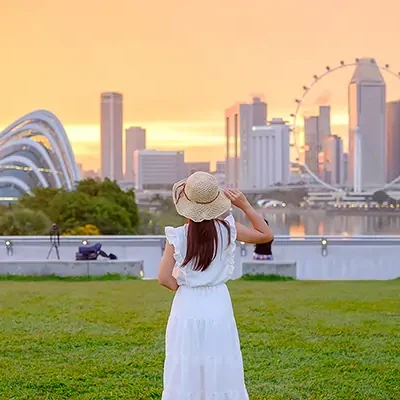
Singapore combines career opportunity, safety, convenience, and world-class infrastructure in a way few cities can. For Australians relocating overseas, it offers a modern lifestyle with strong earning potential, excellent public transport, and easy access to the rest of Asia. Whether you’re relocating for work, family, lifestyle, or business opportunities, Singapore remains one of the most practical and accessible international destinations for Australians.
Of course, there are trade-offs. The Singapore climate is hot and humid year-round, living space is smaller, and housing can be expensive by Australian standards. But for people who choose to live there, those compromises are outweighed by career progression, convenience, and the chance to experience life at the centre of Southeast Asia.
Is Singapore Right for You?
Singapore offers a unique mix of safety, career opportunities, modern infrastructure and global connectivity, but every relocation comes with different lifestyle priorities. Select the factors that matter most to you below and see how well Singapore may suit your ideal way of living overseas.
Select What Matters Most to You
Choose the lifestyle priorities that are most important to you and discover how well Singapore may align with your ideal overseas lifestyle.
Singapore Could Be a Great Match
Based on your priorities, Singapore may offer the right mix of lifestyle, opportunity and convenience for your move from Australia.
Why Singapore Matches Your Priorities
Things Australians Should Consider
While Singapore may not be the perfect fit for everyone, many Australians are drawn to its safety, efficient lifestyle, strong job market and excellent international connectivity. If Singapore aligns with your priorities, Relocations WA can help make your move smoother with professional international moving and shipping services tailored to your relocation needs.
Cost of Living Comparison: Australia vs Singapore
Comparing Australia and Singapore financially isn’t so straightforward since spending patterns tend to change after relocation. Some everyday costs are noticeably lower in Singapore, while others can come as a shock to Australians arriving from cities like Perth, Brisbane, or Adelaide.
Important Note: While the prices quoted here were true at the time of writing (May 2026), the costs of items could vary. These figures are only averages and apply to the time the data was gathered.
Imported products, including beef, dairy, and fruit, often cost more in Singapore due to import duties and limited local production. However, local produce and seafood can be cheaper, especially when purchased from wet markets or neighbourhood supermarkets.
Overall, the cost of living in Singapore can vary significantly depending on your lifestyle, housing preferences, and whether you relocate alone or with family. While some everyday expenses such as public transport, internet, and mobile services are often cheaper than in Australia, accommodation and international schooling can be considerably more expensive, particularly in central areas. Understanding these differences early can help you build a more realistic relocation budget and avoid unexpected financial pressure after arriving in Singapore.
Key Facts About Singapore
Singapore is one of the world’s most modern and efficient city-states, known for its strong economy, low crime rates, excellent infrastructure, and strategic location in Southeast Asia. For Australians relocating to Singapore, understanding the country’s lifestyle, industries, healthcare system, and visa pathways can make the transition significantly smoother.
The table below outlines some of the most important things to know before moving from Australia to Singapore.
Choosing Where to Live in Singapore
Singapore may be small geographically, but where you live significantly influences your experience. Different districts attract different lifestyles, budgets, and work routines, and Australians often choose locations based on commuting time, family needs, and housing type.
Singapore’s equivalent of inner Sydney or Melbourne’s CBD fringe is the Central Singapore region, marked by high-rise living, premium pricing, and constant activity. Expats working in finance, law, and multinational firms often settle here for the convenience it offers. Apartments are modern, transport is excellent, and restaurants, shopping, and nightlife are all nearby. Safety is exceptionally high, even late at night. The trade-off is space: apartments are compact compared to Australian homes, and rents are among the country’s highest.
- Best for: Professionals, executives, expats wanting a short commute
- Housing style: Modern high-rise condos and serviced apartments
- Transport: Excellent MRT connectivity across Singapore
- Lifestyle: Premium dining, shopping, bars, rooftop venues, and entertainment
- Commute: Usually under 15–20 minutes to major CBD office areas
- Family suitability: Better for couples and professionals than larger families seeking space
- Typical vibe: Fast-paced, international, polished, and highly convenient
Best Areas to Live in Singapore for Australians
Singapore may be small geographically, but each part of the city-state offers a very different lifestyle, commute, atmosphere, and housing experience. Some areas are highly urban and fast-paced, while others feel greener, quieter, and more family-oriented. The table below provides a practical overview of some of the most popular areas for Australians relocating to Singapore.
| Area | Feel / Lifestyle | Best For | Pros | Cons | Safety / Practicality |
|---|---|---|---|---|---|
| Central Singapore Orchard, River Valley, Marina Bay, Tanglin | High-rise, urban, polished, busiest and most convenient part of Singapore | Singles, couples, executives, short commute seekers | Very central, excellent MRT access, close to offices, restaurants, shopping, nightlife, and international services | Highest rents, smaller apartments, less space than Australians are often used to | Extremely safe even at night; ideal if convenience is the main priority |
| East Coast & Katong Beachside & Lifestyle Districts | Relaxed, coastal, café-heavy, less corporate and more lifestyle-oriented | Families, expat couples, Australians wanting a beach-suburb atmosphere | Beach access, cycling paths, strong café scene, close to Changi Airport, popular with expats | Still expensive, especially for modern condos; longer commute than central districts | Very safe and highly liveable; good balance between lifestyle and practicality |
| Bukit Timah & Holland Village Upscale Residential Areas | Greener, upscale, residential, with a quieter suburban feel | Families, long-term expats, people prioritising schooling | Close to international schools, larger homes by Singapore standards, quieter streets, dining and nightlife in Holland Village | High rental prices and less convenient than living directly in the CBD | One of Singapore’s most desirable and stable family-oriented areas |
| Western Singapore Jurong, Clementi, One-North | Practical, business-focused, modern, and rapidly developing | Professionals in tech, logistics, education, research, and younger families | More affordable than central areas, strong transport links, modern developments, close to universities and business parks | Less nightlife and prestige compared to Orchard or Marina Bay; more suburban feel | Safe, efficient, and good value if working in western Singapore |
| Northern Singapore Woodlands, Yishun, Sembawang | Quieter, more local, suburban, and generally more affordable | Budget-conscious families, people wanting more living space | Lower rents, calmer atmosphere, larger apartments for the price, good public transport access | Longer commute into the CBD and fewer expat-focused amenities | Still very safe and practical; ideal for those prioritising value and quieter living |
Climate-wise, Singapore is uniformly tropical: hot, humid, and wet year-round. Unlike Australia, seasonal variations are minimal. The biggest lifestyle adjustment for Australians emigrating to Singapore is adapting to apartment living and urban density. However, many find that the convenience, safety, and efficiency the city-state offers more than compensate for the smaller living spaces.
How to Move to Singapore From Australia
Housing sizes differ from Australia, import regulations are strict, and understanding what to ship versus what to replace locally can save you considerable money.
When moving from Australia to Singapore, there are two main shipping methods: air freight and sea freight. The right option depends on your budget, timeline, and how much you plan to bring with you.
Here’s a practical side-by-side table to help with your planning and budgeting:
 By Air |
 By Sea |
|
|---|---|---|
| Best for | Small, urgent, high-priority moves | Full household relocations and long-term moves |
| Typical transit time | A few days to around 2 weeks | Around 3 to 8 weeks |
| Cost | Highest cost per kg or volume | Much cheaper per cubic metre |
| What to ship | Clothes, documents, electronics, work gear, essentials | Furniture, appliances, sports gear, boxes of household items |
| Speed | Fastest option | Slower, but more practical for large shipments |
| Risk of damage | Lower transit time and tightly controlled handling | Generally safe when professionally packed, but with a longer handling chain |
| Customs impact | Faster arrival, but still subject to clearance delays | More paperwork and a longer clearance window possible |
| Ideal for | Singles, couples, expats on short assignments, people needing only essentials | Families, long-term residents, anyone moving a full home |
| Space efficiency | Poor for bulky items | Excellent for bulky or heavy items |
| Convenience | Great if you want immediate access to belongings | Better if you can wait and want to reduce costs |
By Air
By Sea
Which Is Better?
For most Australians relocating to Singapore, sea freight offers better overall value, especially if you’re moving an entire household or plan to stay for the long term. Air freight makes sense only if you’re sending a small, urgent set of essentials and want them quickly.
Checklist Table for Your Australia to Singapore Move
Planning an international move to Singapore involves far more than simply packing boxes and booking a shipment. From visas and accommodation through to customs paperwork, freight timelines, and settling into a new country, staying organised early can make the relocation process significantly smoother. Below is a practical moving timeline and shortened moving-overseas checklist to help you prepare for your move from Australia to Singapore.
 3-6 Months Before Your Move
1-2 Months Before Your Move
2 Weeks to Moving Day
After Your Arrival in Singapore
3-6 Months Before Your Move
1-2 Months Before Your Move
2 Weeks to Moving Day
After Your Arrival in Singapore
Preparing properly before relocating to Singapore can make a major difference to how smoothly your move unfolds. By organising key documents early, understanding shipping timelines, securing accommodation, and planning for customs and logistics in advance, you can reduce stress and avoid many of the common issues people encounter during international relocations. The more preparation completed before departure, the easier it becomes to settle into daily life once you arrive in Singapore.
Cost of Moving to Singapore From Australia (Based on the Number of Bedrooms)
One of the easiest ways to estimate international moving costs is by the number of bedrooms in your home. More bedrooms generally mean more furniture, appliances, cartons, and personal belongings, and this directly affects freight space, labour time, and packing requirements.
Below are some moving estimates for an Australia to Singapore relocation:
These figures generally include export packing, shipping, customs handling, and delivery services. Air freight costs are substantially higher per cubic metre and are usually only practical for smaller loads.
IMPORTANT NOTE: Several factors affect pricing, including the shipment size, access conditions, shipping method, insurance cover, and timing. And remember, storage costs in Singapore can be expensive due to limited space.
Singapore runs on efficiency, but that also means rules are enforced strictly. Customs regulations are tighter than many Australians expect, especially for controlled goods, medications, food items, alcohol, and tobacco products. Incorrect paperwork can delay shipments and could mean extra charges.
It’s best to work with an international removalist experienced in Singapore relocations, local delivery regulations, customs procedures, and apartment access requirements, which can affect both timing and cost if handled poorly.
Australia to Singapore Moving Cost Calculator
Get a quick ballpark estimate for shipping household goods from Australia to Singapore (door-to-door). Prices vary by volume, service level, and season.
Estimate the Cost of Moving to Singapore
This calculator provides a general guide to what you may expect to pay when relocating from Australia to Singapore. Adjust the home size, estimated shipment volume, and optional services to generate a tailored estimate for your move.
International sea freight is the most common option for household relocations to Singapore, offering a practical balance between cost and shipping capacity for most families and individuals.
Please note: Pricing shown is indicative only. Final costs can vary depending on shipment size, collection and delivery access, packing requirements, destination location, customs processing, and any additional services selected.
Why choose Relocations WA?
- Experienced international removalists handling Australia–Singapore relocations
- Complete moving support including packing, shipping, customs assistance, and delivery
- Clear communication, transparent pricing, and realistic transit timeframes
- Trusted international logistics partners and destination support in Singapore
Looking for a detailed quote based on your exact inventory and destination requirements?
Contact Relocations WA for a personalised moving plan and tailored international relocation quote.
Disclaimer: All prices are listed in Australian dollars (AUD) unless otherwise stated. The figures above are intended as general moving cost estimates only and reflect typical Australia–Singapore relocation pricing at the time of writing. Actual costs may vary based on shipment size, service inclusions, access requirements, seasonal demand, shipping route, and your final destination within Singapore. These estimates are provided as a pricing guide only and do not represent a fixed quotation.
Is It Worth Moving to Singapore From Australia?
For many Australians, Singapore offers something that can be hard to find at home: a combination of career opportunities, convenience, safety, and international exposure packed into one highly connected city-state.
Living in Singapore feels very different from Australia. Life moves faster, systems are more structured, and space is limited. Public transport is excellent, streets are clean, and daily errands tend to run efficiently. Commutes that would take over an hour in Sydney or Melbourne are often much shorter. For professionals working in finance, aviation, logistics, technology, engineering, or multinational business, Singapore can open doors that simply aren’t available in Australia’s smaller market.
That said, culture shock exists. Australians are generally more casual and direct, while Singaporean communication tends to be more formal and indirect in professional settings. Rules and regulations are stricter, and public behaviour expectations are higher. Apartment living, humidity, and the intensity of urban density can also require adjustment.
Despite those differences, Australians and Singaporeans share quite a few similarities. Food culture is a major one, since both societies enjoy dining out, social gatherings, and multicultural cuisine. Sport also creates common ground, particularly around Formula One, football, cricket, rugby, and fitness culture. English is widely spoken, which makes daily life far easier than in many other Asian destinations.
The Singaporean workplace tends to be more hierarchical than Australian offices. Decision-making can be less informal, and respect for authority is more pronounced. Australians who adapt well usually succeed by balancing confidence with professionalism.
So, is it worth moving to Singapore from Australia? For people seeking international career growth, financial opportunity, regional travel access, and a highly efficient lifestyle, absolutely.
Why Choose Relocations WA as Your Moving Partner
International relocations work best when handled by people who understand both the logistics and the lifestyle changes involved. At Relocations WA, we’ve helped Australians relocate across Asia and the world for years, including corporate transfers, family relocations, and individual professional moves to Singapore.
Clients choose us because we provide clear communication, realistic timelines, professional export packing, and tailored shipping solutions that actually fit how people live in Singapore. We understand apartment access requirements, customs procedures, storage options, and the practical side of downsizing from Australian homes into Singapore living.
From the first quote through to final delivery, we focus on making the process straightforward and predictable.
Migrating to Singapore or moving for an assignment?
Speak with Relocations WA today for tailored advice and a detailed international moving quote.

55+ Years Experience with Removals & Storage

Personalised & Tailored Storage Solutions

90 Five Star Google Reviews (and growing)