




Your 2026 Guide to the Cost of Living in Melbourne
Author | Steve Blackwell
 relocationswa.com/about/steve-blackwell
 linkedin.com/in/steve-blackwell
Have you been considering a change of scene, and think Melbourne is the best place to set up your new life? Are you relocating to Melbourne for work and are wondering whether you can afford it? Are you planning on moving to Melbourne from overseas and wish to know the cost of living here?
Why would you want to live in Melbourne in the first place?
Well, there are many reasons. Melbourne has always been on the list of major Australian cities—and for good reason. Both locals and tourists love Melbourne as it’s a place where nature, art and culture, sports, entertainment, and beachside life converge. It’s considered a desirable city to live in—with relatively lesser traffic congestion and a slightly less expensive cost of living than Sydney.
It’s where you’ll find part of the Yarra River where you can go canoeing, with the ruggedly beautiful Yarra Ranges National Park nearby that’s great for hiking and exploring. In truth, Melbourne is a great city for doing all kinds of outdoorsy stuff. It doesn’t matter if you’re into museum, library, or gallery visits, or prefer nature-inspired outdoor activities.
Melbourne has plenty of these, and more.
Now that you’re sold on moving to this popular Australian city, we’ll help cover your next concern: the cost of living in Melbourne. In this guide, we get into the nitty-gritty of the expenses you need to prepare for to enjoy living in this city.
Is Melbourne an Expensive City to Live In?
Compared to Melbourne and other major Australian cities, Sydney has always been ranked the most expensive in the country. Nearly a decade ago, Sydney and Melbourne were listed among the most expensive cities to live globally. In 2023, Brisbane, Sydney, Perth, and Melbourne were ranked among the 10 most expensive places in the world for retirees.
So, yes, Melbourne can be an expensive city, especially if you compare how much you’ll spend here with the cost of living in Perth, Brisbane, or living costs in the Gold Coast, or other parts of Australia. While it’s generally more affordable than Sydney, it can still be pricey, particularly in central areas. This is why it’s important to consider the cost of the following if you’re thinking of making Melbourne your new home:
- Housing (rentals and property for sale)
- Utility and household expenses
- Transportation
- Grocery and dining
- Education and childcare
- Healthcare and insurance
- Entertainment, leisure, fitness
- Miscellaneous items
Ultimately, however, how expensive your Melbourne life will be will depend on your location, lifestyle, and spending habits.
Housing Costs in Melbourne
Among the most challenging aspects of house relocation is finding a place to live. It’s also one of the biggest financial decisions you’ll make when moving to Melbourne whether you’re thinking of renting or buying a property.
As always, the location (or suburb) of your new dwelling place matters a lot and can greatly impact your budget. Other factors that can affect how much you’ll spend on housing include the property type and size as well as the number of enquiries for the unit you’re considering.
Renting in Melbourne
Because of the prohibitive prices of property for sale in Melbourne, some people opt to rent. It’s also a common choice for new residents who may be unfamiliar with the city or are planning to have a short-term stay.
To help you get a better picture, here’s some general information on median rental prices by area:
- CBD: One-bedroom apartment units in the city centre typically rent for about AUD 500–800 per week and AUD 700–1,200 per week for a two-bedroom.
- Inner Suburbs (Carlton, Fitzroy, South Yarra): If you’re looking for an apartment in these neighbourhoods, you can expect to pay AUD 450–750 per week for a one-bedroom and AUD 650–1,100 per week for a two-bedroom.
- Outer Suburbs (Frankston, Werribee, Craigieburn): More affordable units can be found in the suburbs where one-bedroom rents start at AUD 350 per week and AUD 500–750 per week for two-bedroom units.
Here’s a table of rental figures you might also find helpful in your house search:
| Unit Size/Location | Rent Price in AUD |
|---|---|
| 1-bedroom apartment in city centre | 2,379.96 |
| 1-bedroom apartment outside of centre | 1,788.44 |
| 3-bedroom apartment in city centre | 4,419.30 |
| 3-bedroom apartment outside of centre | 2,627.13 |
Remember that rental rates are also influenced by:
- Proximity to Public Transportation: In real estate, convenience comes at a price, so expect higher rental rates for properties near train stations or tram lines.
- Amenities: Homes or apartment buildings located close to cafes, restaurants, parks, and shopping centres command higher rents.
Renting also comes with additional costs which may be compulsory or optional:
- Bond Payment: Equivalent to about four to six weeks’ rent upfront.
- Utility Setup Fees: The setting up of electricity, gas, internet, and water connections usually involves fees.
- Renter’s Insurance: This is optional but we recommend it if you want additional protection for your belongings.
Buying Property in Melbourne
If you intend to relocate to Melbourne for the long term, buying property makes perfect sense as long as you’re prepared for the financial responsibility. As with rental rates, you’ll find big differences in property sale prices here because of factors like location, unit type, etc.
Average house and apartment prices by area typically look like the following:
- CBD: Median apartment prices fall within the AUD 600,000–900,000 range.
- Inner Suburbs (Richmond, Brunswick, South Melbourne): Houses in these neighbourhoods may cost around AUD 1.2 million–2 million, while apartment prices range from AUD 600,000–1 million.
- Outer Suburbs (Sunbury, Pakenham, Melton): As with rentals, property prices in the outer suburbs tend to be relatively more affordable, with houses priced around AUD 600,000–900,000 and apartment units starting from AUD 400,000.
Here’s more information to help you calculate how much you can afford to spend on an apartment purchase:
| Apartment Location | Price Per Square Metre in AUD |
|---|---|
| Within the city centre | 10,855.75 |
| Outside the city centre | 8,474.20 |
You also need to set aside a budget for additional expenses like stamp duty (this depends on the property value but can amount to tens of thousands), council rates (vary by suburb and are paid quarterly), strata fees (cover maintenance and the use of amenities) that apply to apartments and townhouses, and maintenance costs (if you purchase a house).

Utilities
Coming up with a realistic budget for Melbourne life also includes factoring in household expenses like utilities, internet connectivity, and mobile phone usage fees.
If you need estimates of how much you could be spending on these items, here’s some information that can help with your calculations.
| Type of Expense | Average Cost in AUD |
|---|---|
| Basic (electricity, heating, cooling, water, garbage) for an 85m2 apartment | 235.63 |
| Mobile phone monthly plan with calls and 10GB+ data | 32.92 |
| Internet (60 Mbps or more, unlimited data, cable/ADSL) | 79.50 |
If you get home insurance and a monthly or annual maintenance plan for your residence, then you also need to add these to your list of household expenses.
Transportation
Getting around the city means spending on transportation. You can always choose between using mass or public transportation or buying and driving your own car.
Whatever means of transportation you go for, this table summarising some common options might help.
| Description | Cost in AUD |
|---|---|
| One-way ticket (local transport) | 5.50 |
| Monthly pass (regular price) | 185.00 |
| Taxi start (normal tariff) | 5.50 |
| Taxi 1km (normal tariff) | 2.20 |
| Taxi 1hour waiting (normal tariff) | 40.56 |
| Gasoline (1 litre) | 1.87 |
| Volkswagen Golf 1.4 90 KW Trendline (or equivalent new car) | 44,423.00 |
| Toyota Corolla Sedan 1.6l 97kW Comfort (or equivalent new car) | 34,794.76 |
On top of these expenses, you may also need to add registration, insurance, toll, and parking fees if you buy or drive your vehicle.

Groceries and Dining Out
What’s life in Melbourne without occasionally eating out? Sure, you can do your grocery shopping and cook your meals, but this isn’t always feasible when you’re working or juggling a job with parenting.
So, besides budgeting for the items you buy regularly during grocery runs, make sure you allocate some money for eating out occasionally.
Here’s a table of common grocery expenses and their average prices to help make food budgeting easier.
| Item Name/Description | Price in AUD |
|---|---|
| Milk, regular, 1 litre | 2.14 |
| Loaf of fresh white bread (500g) | 3.80 |
| Rice, white, 1kg | 3.66 |
| Eggs, regular, 1 dozen | 7.02 |
| Local cheese, 1kg | 13.50 |
| Chicken fillets, 1kg | 14.06 |
| Beef round (or equivalent back leg red meat), 1kg | 22.02 |
| Apples, 1kg | 4.99 |
| Banana, 1kg | 4.43 |
| Oranges, 1kg | 4.61 |
| Tomato, 1kg | 5.80 |
| Potato, 1kg | 3.94 |
| Onion, 1kg | 3.48 |
| Lettuce, 1 head | 3.21 |
| Water, 1.5-litre bottle | 2.17 |
If you’re fond of eating out or doing so on occasion, you may need to consider these average costs as well to enjoy Melbourne’s café culture and partake of its numerous culinary offerings.
| Item Name/Description | Price in AUD |
|---|---|
| Meal, inexpensive restaurant | 25.00 |
| Meal for 2 people, mid-range restaurant, three-course | 120.00 |
| McMeal at McDonalds (or equivalent combo meal) | 15.00 |
| Domestic beer, 0.5-litre draught | 11.50 |
| Imported beer, 0.33-litre bottle | 12.00 |
| Cappuccino, regular | 5.38 |
| Coke/Pepsi, 0.33-litre bottle | 4.03 |
| Water, 0.33-litre bottle | 3.53 |

Education and Childcare Costs
Are you moving to Melbourne with your family or your kids? If so, you’ll be happy to know that the city has a well-regarded educational system, as well as several reputable public and independent schools and prestigious universities.
If you have preschoolers, you may want to check out the following:
| Description | Average Cost in AUD |
|---|---|
| Preschool (or kindergarten), full day, private, monthly for 1 child | 2,639.57 |
| International primary school, yearly for 1 child | 31,005.88 |
To save on expenses, make sure you check whether you’re eligible for the government’s childcare subsidy (CCS). This can cover as much as 90% of fees, depending on your family’s circumstances and as long as you meet all requirements.
The cost of education in Melbourne depends on the type of school (government, Catholic, or independent) your child will be attending and their level of education. Government education in Melbourne is estimated to cost AUD 114,126 over 13 years for a child starting school in 2024.
Here’s a table that compares the average cost of education in Melbourne, according to the schooling sector:
| Type of School | Cost of Education Over 13 Years (AUD) |
|---|---|
| Government | 114,126 |
| Catholic | 198,291 |
| Independent | 388,618 |
The above figures include tuition fees and ancillary costs (e.g., uniforms, books, excursions).
At the primary level (Prep to Grade 6), the annual tuition fee for international students in the state of Victoria is AUD 13,922. Typical course fees at the University of Melbourne for bachelor’s degrees range from AUD 37,312 to 75,696 per year.

Healthcare and Insurance
Like the rest of Australia,Melbourne offers high-quality healthcare through a mix of public and private providers. Knowing about these costs and your coverage options will help you budget for medical expenses and decide whether you want or need private health insurance.
Free and low-cost treatment can be had at public hospitals. You can also save with bulk-billed GP visits, and subsidised prescription medications. However, private healthcare means you get better access to specialists and your chosen doctors. You’ll also be covered for services not included under Medicare, such as dental and physiotherapy which tend to be pricey.
As for private health insurance, basic coverage starts at AUD 80–150 per month while more comprehensive plans provide coverage ranging from AUD 200–400 per month (including hospital stays, dental, and extras). Depending on your age and income, you could also be eligible for government rebates or discounts.
Entertainment, Fitness, and Other Lifestyle Expenses
As they say, ‘All work and no play makes Jack a dull boy.’ And play you can—a lot, in fact—in Melbourne.
Good thing the city has virtually everything you need for fitness, entertainment, leisure, and more. You’ll find free parks and gardens, movie theatres, concert halls, fitness clubs, gym memberships, bars, beaches, and a whole lot more in Melbourne. The availability of paid and free entertainment here makes it a great city for all budgets.
Check out the following average costs to get some inspiration for your lifestyle budget:
| Item Name/Description | Price in AUD |
|---|---|
| Fitness club, monthly fee for 1 adult | 78.24 |
| Tennis court rent for 1 hour on weekends | 23.21 |
| Cinema, international release, 1 seat | 25.00 |
| Concert ticket for 1 | 50.00+ |
Miscellaneous Living Costs
As an expense category, miscellaneous living costs include several small fees or amounts that can add up beyond typical major expenses like rent, utilities, and groceries. Everyday expenses like personal care products, subscriptions, and pet care should be included in your miscellaneous budget.
- Haircuts/Beauty Treatments: If you get haircuts and/or beauty treatments (e.g., mani-pedis, facials) regularly, you may need to add around AUD 50–300 to your monthly budget. The amount you need will depend on the services rendered and the type of salon you frequent.
- Subscription Services (Netflix, Spotify, etc.): Add approximately AUD 10–60 per month if you’re the kind who needs digital entertainment from streaming services Netflix, Disney+, HBO, Stan, etc.) and music subscriptions (Spotify, Apple Music), and if you use cloud storage (Google Drive, iCloud).
- Pet Care Expenses: Fur parents need to allocate a monthly budget for their pets. Vet visits for routine checkups, vaccinations, and hospitalisation or confinement can cost plenty. You’ll have these covered plus pet insurance, and pet food and grooming expenses by budgeting around AUD 300–400 a month per pet. How big or small pet care costs get will also depend on what kind of pet you have and veterinary or pet hospital fees.
Moving Costs and Tips for Newcomers
Moving to Melbourne will cost you, and how much will spend will depend a lot on where you’re coming from—within the state of Victoria, interstate, or from an international location.
Your relocation expenses will include hiring removalists, finding temporary housing (you can subtract this expense if your new place is move-in ready), arranging for end-of-lease cleaning (if you’re renting your ‘old’ home), purchasing packing materials (although some removalists offer this), and shipping costs (if your possessions need to be shipped from overseas).
You can manage your budget better if you follow these tips:
- Plan your move (use a moving checklist if you have a lot to cover) months ahead of your schedule and ask for removalist quotes as early as possible. This way, you can find a reputable mover (e.g., Perth to Melbourne removalists) and even get discounts if you book them in advance. Remember, last-minute bookings cost more.
- Sell or donate some of your belongings during decluttering to minimise moving expenses. When you do this, you can earn extra from what you’re able to dispose of in a garage sale while also reducing how much you need to pack (more stuff=higher costs).
- Pack your things. Another way to save money is by DIY-ing this task. You can do this if you have ample time between packing and your move date. If you’re in a hurry, you may be forced to pay to get all your things packed in time for your move (unless friends or family are ready to lend a hand). However, hiring your chosen removalist to do the packing can also mean professional (read: proper and safe) work.
You may also be tempted to DIY your move; however, make sure to tread carefully as house relocations can be fraught with stress if not planned properly.
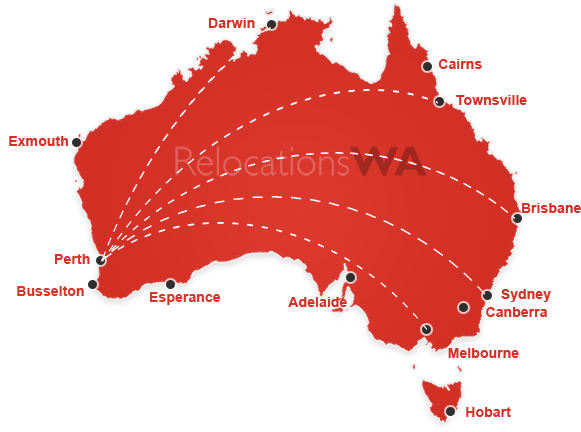
Make Moving to Melbourne Stress-Free With Relocations WA
The thought of moving to the wonderful city of Melbourne can be exciting, but it’s very important to know exactly what you’re getting into.
Therefore, always consider the cost of living as this will have a definite impact on your personal finances and the kind of lifestyle you’ll have once you’re living in Melbourne. The more and the earlier you get this covered, the better your prospects will be.
Once that’s covered, you also need to partner with a professional removalist that can make moving to Melbourne easier and more efficient, especially if you’re contemplating a long-distance move. You need a dependable moving service that can handle all logistical concerns so your belongings arrive safely and on time as you focus on settling into your new home.
So, for a hassle-free moving experience, contact Relocations WA.
We provide safe and reliable removalist services whether you’re moving to Melbourne from within Victoria, from another state, or need help with international relocation.
Contact us today to get a personalised quote and take the stress out of your move.
Moving house?
You might also like
Best Suburbs in Sydney to Live in
Sydney is such an exciting — and sometimes overwhelming — place to live. It is a giant metropolis with unbelievable diversity, comprising beach suburbs, green family neighbourhoods, inner-city metropolises, and cheaper outer areas.…

Cost of Living in Ireland vs Australia
“What’s the difference between the cost of living in Ireland vs Australia?” “Is it cheaper to live in Ireland or Australia?” It’s a fair question—and one that doesn’t have a simple answer. Both…


Cost of Living in Australia vs Canada: A Comprehensive Guide
For Australians considering a move overseas, Canada often comes up as a serious contender, not only for lifestyle reasons. From a professional removalist’s point of view, we see this shift play out in…