



Cost of Living in Gold Coast: In-Depth Guide + Calculator


Author | Steve Blackwell
 relocationswa.com/about/steve-blackwell
 linkedin.com/in/steve-blackwell
Are you one of the many considering a move to the Gold Coast? If so, you’re not alone. With its year-round sunshine, long sandy beaches, and growing urban infrastructure, the Gold Coast is one of the top destinations for those looking to relocate from Sydney, Melbourne, and even from overseas.
The Gold Coast offers a fun beachside lifestyle that blends laid-back living with modern conveniences. No wonder it’s a compelling choice for families, professionals, and retirees alike.
But, if you do decide to live in one of Australia’s most desirable coastal cities, how much would it cost you, exactly?
As seasoned removalists who regularly help people move into and around the Gold Coast, we see more than just boxes and packing tape. We also see the financial planning that goes into a successful move to the Gold Coast, especially when it comes to budgeting for daily life. Housing, utilities, and even transport can catch newcomers off guard if they don’t do their homework.
If you need help calculating how much you’ll need to live in the Gold Coast, this guide has you covered because it’s built on practical experience. It comes with helpful, practical information, especially if you want to make comparisons regarding the cost of living in Perth or the cost of living in Sydney with that of the Gold Coast. With this guide, you’ll get a clear, grounded look at what you can expect to spend living in this sunny city.
➜ Related: Cost of Living Adelaide
Gold Coast Cost of Living Calculator
Employment and Income
Before zeroing in on living costs, let’s first take a look at the employment and income opportunities in the Gold Coast. The city’s job market has matured well beyond tourism, although that sector still plays a big role in the local economy.
Healthcare, education, construction, and digital services now offer steady employment for professionals and skilled workers. If you have flexible skills or work in a remote setup, the city offers a good mix of opportunity and lifestyle.
Hospitality and tourism roles pay from AUD 26–35 per hour for casual workers, depending on experience. Healthcare roles such as nursing average around AUD 80,000 per year. Teachers earn between AUD 75,000 and 100,000, while digital professionals, such as software developers, can earn between AUD 90,000 and 120,000 depending on experience.
Here’s a table summarising income averages based on industry.
| Industry | Average Annual Salary (AUD) |
|---|---|
| Hospitality | 50,000–65,000 |
| Healthcare (including doctors) | 75,000–300,000+ |
| Education | 75,000–100,000 |
| Construction | 65,000–90,000 |
| IT and Digital | 90,000–120,000 |
Retail and admin role salaries generally start at AUD 50,000 to 65,000 annually.
Many newcomers work remotely or run freelance businesses, so co-working spaces here are quite popular. Expect to pay AUD 150–350 per month, depending on the location and the services you require.
There are plenty of flexible desks in Southport, Burleigh, and Robina. Your job-hunting success will depend on your field—some employers prefer local applicants, so updating your CV to reflect a local address can help.
Housing and Accommodation Costs
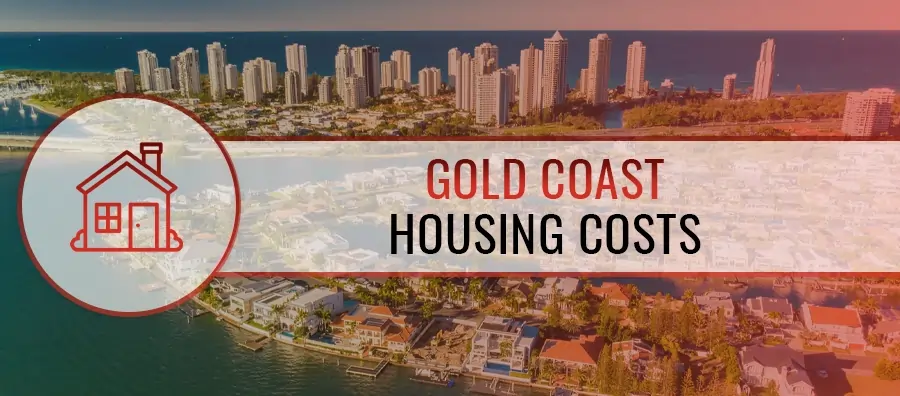
Housing will likely be your biggest expense when you move to the Gold Coast. After all, the demand for rentals and real estate for sale remains high in this city, especially in beachside suburbs. Therefore, it’s important to know what you’re walking into before signing a lease or making an offer.
Renting in the Gold Coast
The rental market here is competitive. In Surfers Paradise, you can expect to pay around AUD 650 per week for a two-bedroom apartment, especially if you opt for a high-rise with partial ocean views.
Broadbeach is similarly priced, although you might find more units with modern fittings or in newer buildings. If you head inland to Southport or Robina, weekly rents drop to around AUD 550 for a similar property, offering better value but with longer commutes to the surf.
Here’s an overview of apartment rentals in the city:
| Apartment Unit Size | Approximate Monthly Rent in AUD |
|---|---|
| Apartment (1 bedroom) in the city centre | 2,350 |
| Apartment (1 bedroom) outside the city centre | 2,200 |
| Apartment (3 bedrooms) in the city centre | 3,800 |
| Apartment (3 bedrooms) outside the city centre | 3,200 |
Proximity to the beach, tram lines, and shopping centres significantly affects price. A unit within walking distance to the beach commands a premium, as does anything along the G:link light rail corridor.
Rental demand peaks around the summer holidays and university intake periods, so expect to exert some extra effort to secure good housing during these periods: December–February and July–February, particularly if you’re looking to live near campuses like Griffith University. You’ll also need to factor in upfront costs like the rental bond (usually equivalent to four weeks’ rent), two weeks’ rent in advance, and utility connection fees.
Buying Property in the Gold Coast
The Gold Coast property market offers variety, but the choices are rarely cheap. As of early 2025, median house prices sit at just over AUD 950,000, while median unit prices are around AUD 720,000.
Surfers Paradise, Main Beach, and Burleigh Heads often exceed these averages, because of their desirable (read: high-demand) beachfront locations and luxury developments. More affordable suburbs like Coomera or Pimpama offer new homes from the low AUD 700,000s, which makes these areas more appealing to first-home buyers and young families.
Newer homes may save on maintenance costs early on, but often come with higher council rates and developer levies. Strata fees for units can be steep, especially in buildings with pools, lifts, or onsite managers. Older homes can be cheaper upfront, but may require more frequent repairs or upgrades. If there are budgetary constraints, make sure you weigh the pros and cons of your options carefully.
One often overlooked cost is flood insurance. Certain parts of the Gold Coast, particularly those located near canals or low-lying areas, may attract higher insurance premiums due to flood risk. Always check local flood maps and council zoning before committing to a purchase.
Utility and Household Bills
Once you’ve found a place to live, the next thing you need to do is determine the budget you’ll need to keep your household running month to month. Utilities in the Gold Coast are fairly standard, but the subtropical climate can increase electricity usage.
Your electricity bills will fluctuate depending on the season. Since summers can be hot and humid, frequent air conditioning use can drive bills higher, especially between November and March. If you’re using ducted air or have a pool pump running daily, expect your power bills to cost more.
Water bills generally cost around AUD 250–300 per quarter, with usage charges on top of fixed supply fees. Some rental homes include water in the rent price, but this is less common for houses. Gas isn’t used in all homes, but when it is, average quarterly bills fall under AUD 150.
Internet speeds in the Gold Coast are reliable in most areas, especially those covered by NBN. A standard unlimited broadband plan (50 Mbps) costs around AUD 70 per month. Newer developments usually have faster fibre connections but can cost more. However, this might be an easy compromise if your priority is better performance, and if you or other family members are working or studying from home.
| Utility Type | Approximate Cost (AUD) |
|---|---|
| Electricity bill | AUD 30–500 per quarter |
| Water bill | AUD 250–350 per quarter |
| Gas | AUD 150 per quarter |
| Standard unlimited broadband plan (50 Mbps) | AUD 55–70 per month |
Keep track of these ongoing expenses to manage your living costs, especially during the first year when you’re still making adjustments to your budget.
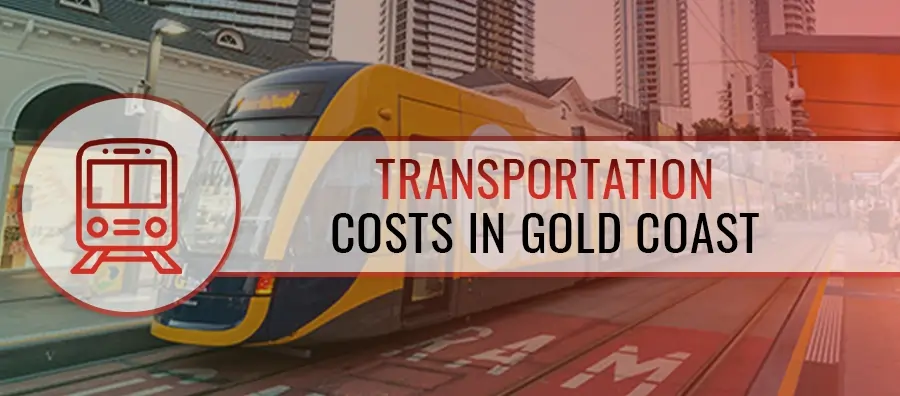
Transportation and Commuting
Getting around the Gold Coast is easier than many expect. Similar to other places, the city offers options for both public and private transport. If you’re planning to use public transport or drive a car, you’ll need to factor in certain expenses that differ slightly from those in major cities like Sydney or Brisbane.
Public Transport
Public transport in the Gold Coast includes the G:link light rail, an extensive bus network, and train connections to Brisbane. The TransLink Go Card is the main payment method across all these services.
As of 2025, fares start from AUD 3.55 per adult trip within one zone, with daily caps and discounted rates for seniors, students, and children. Most locals find that the Go Card offers the best value, especially for regular commuters.
The light rail is quite convenient if you’re living along the coast from Helensvale down to Broadbeach, so it’s a very popular option for those without a car. Trains from Helensvale Station to Brisbane take about 70–90 minutes, depending on your destination. It’s a workable option for commuters, though, as expected, the early and late services can be crowded.
Private Vehicle Costs
If you own a car, you’ll be spending on registration (around AUD 800 per year for a standard car), compulsory third-party insurance, and optional comprehensive cover. Fuel prices in 2025 are averaging AUD 1.90 to 2.10 per litre, so it’s advisable to keep an eye on local price cycles to fill up at the right time.
Parking is generally easy outside the city centre, but beachside areas like Surfers Paradise, Broadbeach, and Burleigh Heads can be tricky during weekends and peak seasons. Council-run meters and private lots typically charge between AUD 3 and 6 per hour. Monthly parking passes for commuters in Southport or central areas can range from AUD 120 to 250.
The Gold Coast doesn’t have toll roads within city limits; however, drivers heading to Brisbane or beyond via the M1 may encounter tolls, especially if detouring through Brisbane’s network of tunnels or bridges.

Food, Dining, and Groceries
One of the first things people notice after moving to the Gold Coast is the cost of food, especially if they’re coming from cities where wholesale options are common. Weekly grocery costs will depend on your family size and shopping habits, but you can plan on spending AUD 100–150 per week for a single person and AUD 250–350 for a small family.
Major supermarket chains like Woolworths, Coles, and Aldi are virtually everywhere. Aldi often wins on price for pantry basics, while Woolies and Coles offer superior convenience and rewards points.
Local farmers’ markets—such as those in Miami and Burleigh—are excellent for fresh produce shopping, though these are not always the cheapest. Carrara Markets is another spot where some residents go for bulk buys or bargain goods.
To help with your budgeting, here’s an overview of the cost of common grocery items:
| Item Name | Average Price in AUD |
|---|---|
| Chicken breast, 1kg | 8.74 |
| Beef round, 1kg | 19 |
| Milk, whole fat, 1 litre | 1.84 |
| Eggs, large, 1 dozen | 6 |
| Local cheese, 500g | 9 |
| Loaf of fresh white bread, 500g | 3 |
| Rice, 1kg | 2.50 |
| Tomatoes, 1kg | 4.50 |
| Apples, 1kg | 4.20 |
| Potatoes, 1kg | 3.60 |
| Bananas, 1kg | 3.25 |
| Oranges, 1kg | 3.51 |
| Onions, 1kg | 3.20 |
Dining-out expenses can range from affordable to premium. A coffee at most cafés costs around AUD 5, and lunch at a casual café or take-away joint can set you back by AUD 15–20. Dinner in a mid-range restaurant starts from AUD 30–50 per person, excluding drinks.
Gold Coast locals love dining out, but it’s easy to find good-value eats if you know where to look. Vietnamese and Thai eateries in Southport, food trucks in Palm Beach, and local favourites like Miami Marketta offer satisfying meals without the inflated price tag of tourist hotspots.
Recreation and Fitness
The Gold Coast’s generally warm, outdoor-friendly climate makes it a haven for people with active lifestyles. The beach is free, but there are options for those with hobbies and inclinations that go beyond water activities.
Gym memberships typically cost between AUD 20 and 40 per week, depending on the facility and contract type. If you enrol in yoga studios or boutique fitness classes, expect to pay around AUD 25–35 per session. Unlimited class memberships are typically priced at AUD 60–100 per week.
But you don’t need to spend on getting healthy and fit because local councils also provide free outdoor gyms, walking tracks, and sports facilities. Community sport clubs (e.g., football, netball, and surf lifesaving) also offer individuals and families affordable ways to engage with the local community.

Entertainment and Leisure
If you’re someone who always needs a calendar of social activities, you’ll be glad to know that the Gold Coast also has a buzzing social scene enriched by tourism. Whatever your inclination, there’s a great variety of entertainment and leisure options here, including nightlife socials and nature activities.
Regular movie tickets cost around AUD 20. If you’re fond of nights out with drinks, expect to spend around AUD 60–100, depending on the venue. Clubs in Surfers Paradise tend to charge entry fees, but many bars and pubs offer happy hour specials and live music at no cost.
Some big local attractions include theme parks like Movie World, Sea World, and Dream World. A single (adult) ticket costs around AUD 120. However, annual passes (approximately AUD 199) are highly recommended for families who visit several times a year.
Weekend getaways to hinterland towns like Tamborine Mountain or Springbrook involve modest travel costs but deliver great returns in terms of experience. Camping is also popular, with many low-cost campgrounds available across the Gold Coast region.

Education and Childcare
Families moving to the Gold Coast will find a variety of education and childcare options. However, education and childcare expenses differ depending on the type and location of the establishment.
Childcare
Childcare fees vary based on the type of service (e.g., long day care, family day care) and the suburb. You can expect to pay between AUD 110 and 160 per day for long day care. To reduce your out-of-pocket expenses, check your eligibility for the federal Child Care Subsidy (CCS). However, note that wait lists can be long in popular suburbs, so register early.
Primary and Secondary Schools
As with the rest of Australia, public school attendance is free, though voluntary contributions and costs for uniforms, books, and excursions can add up to AUD 1,000 or more per year. Some public schools in high-demand catchment areas have strict zoning policies.
Private school fees range widely, from AUD 4,000 to over AUD 20,000 per year. Catholic schools generally charge lower tuition than independent private schools. Reputable academic establishments like Somerset College, A.B. Paterson College, and All Saints Anglican School cater to local and international students.
TAFE and University Education
For those pursuing tertiary education, the Gold Coast is home to Griffith University, Bond University, and TAFE Queensland.
Domestic students at Griffith can expect to pay around AUD 7,000 to 10,000 annually, while international student fees range from AUD 25,000 to 35,000 per year, depending on the program. TAFE programs are more affordable and typically cost around AUD 3,000 to 8,000 annually, with various government subsidies available.
Healthcare and Medical Expenses
At the Gold Coast, locals enjoy excellent access to public and private healthcare facilities. Public hospitals like the Gold Coast University Hospital offer world-class care, and residents with Medicare access most services at little to no cost.
However, many residents choose private health insurance to avoid long wait times or to access private hospitals such as Pindara Private or John Flynn. Basic private health insurance starts from AUD 90 per month for singles, and family cover ranges from AUD 200 to 400. Of course, these costs depend on the level of coverage.
Out-of-pocket GP consultation fees can range from bulk-billed (free with Medicare) to around AUD 85–100 per visit. Specialist and dental fees usually cost more, as these are not (usually) fully covered by Medicare or private insurance.
Tips for Moving and Managing Costs
Similar to calculating living costs in Melbourne and living costs in Brisbane, your life in the Gold Coast can be affordable or expensive, depending on the choices you make. Although housing and some services may come at a premium, there are ways to control and manage costs.
Besides, the Gold Coast is relatively more affordable than other major cities. However, if you want to get more insights and have a fair point of comparison, you may want to know about the average cost of living in Australia.
That being said, here are some moving and general budgeting tips for newcomers:
- Schedule your move outside of peak seasons to get better rates.
- Ask for quotes (especially interstate moving costs) from different removalists and compare.
- To ensure you partner with the right movers (e.g., Perth to Gold Coast removalists), check online reviews or customer feedback posted on third-party or independent websites.
- When budgeting for your move, include the cost of packing supplies, bond cleaning, utility disconnection and reconnection, and temporary storage and accommodation (if needed).
- Declutter before your move, and dispose of, give away, or sell what you can.
- Make sure to compare internet and utility providers to maximise signup bonuses.
- Use public transport and buy a Go Card for daily commutes.
- Take advantage of community centres and council-sponsored events.
- Shop at local markets for fresh, affordable produce.
- Keep an emergency fund for unexpected expenses like medical care or car repairs.
For an efficient move, you can also refer to our guide on “How to Plan a Move to Another State.”
Move to the Gold Coast With Relocations WA
Partner with Relocations WA to make your relocation to the Gold Coast easier.
We’re experts in both local and long-distance moving services (including international removals).
We also provide practical advice, cost-saving options, and transparent quotes. This way, there won’t be any unpleasant surprises on moving day.
Ready to get started?
Get in touch with Relocations WA for a custom quote and expert tips to make your move to the Gold Coast as smooth and stress-free as possible.
If you’re thinking of a Gold Coast move from the UK, check out our guide that compares the cost of living in the UK and Australia, and ask about the cost of international removals at Relocations WA.
Moving house?
You might also like

Richest Suburbs in Perth: Where Interstate Movers Find Premium Living
We often speak with families, professionals, and downsizers who are moving to Perth because they want more than a new address. They want space, better lifestyle balance, beautiful beaches, access to the Swan…

Worst Suburbs in Melbourne: What You Should Know Before Relocating
Melbourne is one of Australia’s most popular relocation destinations, and it is easy to see why. It has strong job opportunities, great food, major universities, family-friendly pockets, and plenty of lifestyle variety. But…
Best Suburbs in Melbourne: Finding the Right Melbourne Suburb for You
Melbourne stands out as one of the world’s most livable cities thanks to its strong healthcare system, high-quality education, vibrant culture, reliable infrastructure, and overall stability. It currently ranks as the top city…




